Picture this: your crew leaves the yard at 7am with a full schedule. By 9am they’re sitting on the 405, burning fuel, burning time, and watching the first job of the day slip behind schedule. By noon, everything is running 45 minutes late. By end of day, two jobs got cut short and one client is already texting asking what happened.
This isn’t a California-specific problem. But California makes it worse than anywhere else in the country. The traffic, the distances between job sites in L.A. and the Bay Area, and fuel prices that consistently run higher than the national average turn every inefficient route into a direct hit on your margins.
The landscaping companies growing in California right now aren’t working harder. They’re running smarterwith real-time GPS tracking that shows them exactly where their crews are, what’s costing them money, and how to fix it.
How do landscaping companies in California reduce fuel costs and manage crews across multiple job sites?
The biggest lever available to a landscaping operation in California is route optimization. Not planning better routes the night before optimizing them in real time based on what’s actually happening on the road.
Landscaping companies using Satrack in California have reduced fuel consumption by an average of 14% and recovered an average of 22 minutes of productive crew time per vehicle per day within the first 90 days. Across a 10-vehicle operation, that’s 220 minutes of recovered capacity daily — without adding a single crew member or vehicle.
Where California landscaping operations lose the most money
1. The fuel bill that never makes sense
California fuel prices run 40-60 cents above the national average consistently. For a landscaping operation running 10 vehicles averaging 60 miles per day each. GPS route optimization cuts the miles driven, which cuts the fuel spend directly, regardless of what the pump price is doing.
2. Drive time between jobs that nobody is tracking
In the L.A. basin, a job site in Van Nuys and a job site in Culver City are 12 miles apart. On a clear day that’s 20 minutes. During morning traffic it’s 55 minutes. A crew making that drive twice a day during peak hours is losing 70 minutes of billable time to traffic, every single day. GPS tracking shows you exactly where that time is going and lets your dispatcher reroute around it before the crew hits the bottleneck.
3. Vehicles sitting idle between jobs
Idle time is invisible without GPS. A crew that finishes a job in Pasadena at 10:30am and isn’t scheduled until 11:30am in Arcadia might park and wait — or drive around burning fuel — and you’d never know. Satrack shows idle time per vehicle per day so you can close the gaps in the schedule and put that time to work.
How do landscaping operations in Los Angeles and the Bay Area handle high-traffic route planning?
L.A. and the Bay Area are two completely different logistics challenges for landscaping companies — and most operations serving both markets run the same routing approach for both, which works for neither.
Los Angeles: density, sprawl, and traffic that never fully clears
The L.A. basin is one of the most complex routing environments in the country for field service operations. Job sites are spread across dozens of distinct neighborhoods, each with different traffic patterns, parking conditions, and access times. A landscaping schedule built the night before without real-time traffic data is already outdated by 7am. Satrack’s live traffic integration means your crews are always on the fastest available route, not the one that looked good yesterday.
Bay Area: premium market, zero tolerance for delays
San Jose, San Francisco, and the Peninsula represent the highest-value landscaping contracts in California HOA accounts, commercial properties, and high-end residential clients who expect precision. In this market, showing up late isn’t just inconvenient. It costs contracts. GPS tracking gives Bay Area landscaping operations the visibility to guarantee arrival windows, prove service completion, and communicate proactively when anything changes.
The routing approach that works across both markets
The operations that successfully run crews in both L.A. and the Bay Area use GPS data to build separate route templates for each market different start times, different stop sequences, different traffic buffers. Satrack’s platform lets you manage multiple market profiles from a single dashboard so you’re not applying L.A. logic to Bay Area routes or vice versa.
What makes California’s landscaping market uniquely demanding
The most competitive market in the country
California has more licensed landscaping companies per square mile than any other state. In markets like L.A., Orange County, and the South Bay, the difference between winning and losing a recurring commercial contract often comes down to one thing: reliability. GPS tracking is what makes reliability provable, not just promised.
Clients who expect real-time communication
California’s commercial and HOA landscaping clients are among the most demanding in the country. They want to know when your crew is arriving, when the job is done, and why anything changed from the original schedule. With Satrack, your office can answer those questions instantly — with exact location data and timestamps, instead of calling the crew and relaying information.
What changes the day you implement GPS tracking in your California landscaping operation
- Routes are optimized each morning based on real-time traffic, crews leave the yard on the fastest path, not the planned one
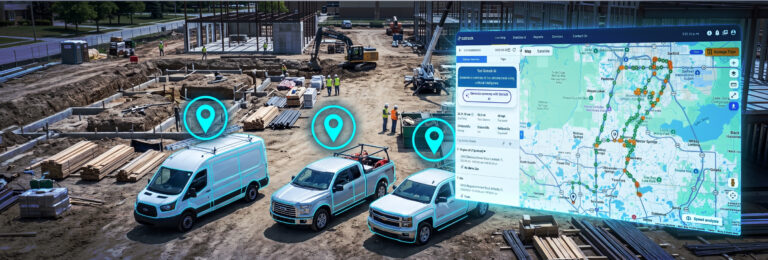
- Your dispatcher sees every vehicle on a live map, no calls to find out where a crew is or when they’ll finish
- Fuel spend drops within the first month as dead miles and idle time get eliminated from daily schedules
- When a client in Brentwood or Palo Alto asks where their crew is, you answer in seconds with exact location and ETA
- At end of day you have a full record of every job completed, every stop time, and every mile driven, ready for billing and client reporting
- Maintenance alerts based on mileage keep your vehicles out of the shop and on the road during peak season
Satrack is working with field service operations across California. If you want to see what your landscaping business looks like with full GPS visibility, and what it’s costing you not to have it, talk to our team today.
Frequently asked questions
How does GPS tracking reduce fuel costs for landscaping companies in California?
GPS route optimization reduces the total miles driven per day by eliminating backtracking, inefficient stop sequences, and routes that don’t account for real-time traffic. Combined with idle time alerts that flag vehicles sitting between jobs, Satrack clients in California typically see 12-15% fuel savings within the first quarter — which on California’s above-average fuel prices translates to significant monthly savings.
Can GPS tracking help manage landscaping crews across L.A. and the Bay Area simultaneously?
Yes. Satrack’s dashboard shows every vehicle across all markets on a single screen. You can set different route parameters, geofences, and scheduling templates for L.A. and Bay Area operations independently — so each market gets managed according to its own traffic patterns and client expectations, not a one-size-fits-all approach.
How do I know if my landscaping crews are staying on schedule across multiple job sites?
Satrack shows each vehicle’s real-time position against its planned schedule. If a crew is running late, you see it on the dashboard before the client calls. Automated alerts notify you when a vehicle hasn’t arrived at a scheduled location by the expected time — giving you the window to communicate proactively instead of reactively.
Is GPS tracking worth it for a small landscaping company with fewer than 10 vehicles?
In California, especially so. The combination of high fuel prices, expensive labor, and intense competition means every inefficiency costs more here than in any other state. A 5-vehicle operation recovering 20 minutes of productive time per vehicle per day and cutting fuel spend by 12% can recover $25,000-$35,000 annually more than enough to justify the investment.
Can Satrack verify that my crews completed their scheduled jobs at the right locations?
Yes. Satrack records the exact arrival and departure time for every vehicle at every location. You can pull job completion records for any date, any vehicle, and any client with GPS coordinates confirming the crew was at the right address. That data protects you in billing disputes and gives commercial clients the accountability reporting they increasingly require.