Imagine this: your drivers leave on time, your trucks are full, and your routes look clean on paper. But at the end of the month, your cost per delivery keeps climbing — and you can’t pinpoint exactly why.
That’s the reality for most delivery fleet owners in Florida. Not because they’re doing something wrong, but because Florida is one of the hardest states in the country to run a delivery operation. Traffic that doubles during tourist season, unpredictable weather, and cities spread out across hundreds of miles it all adds up silently.
The good news: most of that cost is recoverable. And the fleets that are recovering it aren’t doing anything complicated they’re simply running with real-time GPS tracking and route optimization. Here’s what that actually changes.
How can delivery fleets in Florida reduce costs and improve route efficiency?
The short answer: stop guessing and start seeing. Fleets using Satrack in Florida have reduced fuel costs by an average of 13% and improved on-time delivery rates by 17% within the first 90 days. That’s not a marketing number. That’s what happens when a dispatcher can see every vehicle in real time and react to what’s actually happening on the road, not what was planned the night before.
A 30-truck fleet in Florida that cuts fuel spend by 13% and eliminates re-delivery costs from missed windows can recover $180,000–$240,000 per year. That’s not growth. That’s money already being spent, just going to waste.
Three things drain Florida delivery fleets more than anything else:
- Static routes in a city that never stays the same
Miami at 8am in January is not the same city as Miami at 8am in July. Tourist season alone adds 20-30% more vehicles to the roads across the state. A route that takes 4 hours in the summer can take 6 in the winter — but most fleets are still running the same route plan year-round. Real-time GPS adjusts automatically. Your drivers stop sitting in traffic that could have been avoided.
- Re-deliveries that nobody is tracking closely enough
Every missed delivery window in Florida costs between $14 and $18 when you add up driver time, fuel, and the second attempt. If your fleet misses 3-4% of its daily stops — which is completely normal without route optimization — and you’re running 500 stops a day, that’s up to $36,000 every single month in costs that shouldn’t exist.
- Idle time that adds up faster than you think
Florida’s fuel prices run 8-12 cents above the national average. A truck sitting idle for 45 minutes a day in Miami traffic burns the same fuel as 15 extra miles of driving. Multiply that across your fleet and you’ll find a significant fuel bill hiding inside your daily schedule.
How do Florida delivery fleets manage operations during hurricane season?
If you’ve operated a fleet in Florida for more than a year, you already know: hurricane season isn’t an emergency. It’s a six-month operational reality you either plan for or lose to.
The fleets that lose the least during a storm event have one thing in common — they know exactly where every vehicle is the moment a weather alert goes out. That’s it. That single capability changes everything:
- When an evacuation order drops, you move vehicles to safety in minutes, not hours
- When roads close on I-75 or I-4, your drivers get automatic reroutes before they hit the closure — not after
- When the storm passes, you resume operations using the same route data and customer records you had before — no rebuilding from scratch
The difference in numbers: fleets with real-time GPS lose an average of 1-2 days per storm event. Fleets without it lose 4-5. Over a full hurricane season, that gap is worth 6-9 operational days — days your competitors are delivering while you’re still getting back up to speed.
Florida is not like other states — and your fleet tracking shouldn’t be either
Most GPS fleet tracking tools are built for simple, predictable markets. Florida is neither of those things. Here’s what makes it different:
Four major cities, four completely different logistics realities
Miami, Tampa, Orlando, and Jacksonville don’t operate the same way. Miami is dense, multilingual, and traffic-heavy year-round. Orlando swings wildly between slow summers and packed winters. Tampa is a growing port city with its own industrial delivery patterns. Jacksonville is spread out with long highway runs between stops. A fleet covering two or more of these markets needs a system that adapts per city not one master route plan trying to cover all of them.
What real-time GPS fleet tracking actually does for your operation
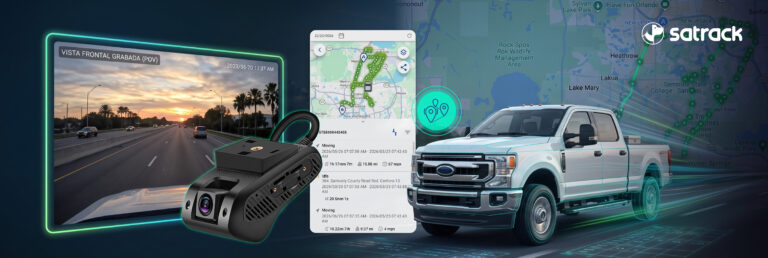
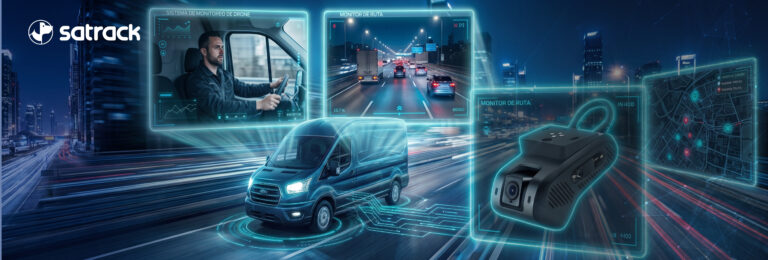
Here’s what changes the day you implement Satrack in your Florida fleet:
- Your dispatcher sees every vehicle in real time — no more calling drivers to find out where they are
- Routes update automatically when traffic, weather, or road conditions change
- You know which stops are taking longer than planned and why — so you can fix it
- During a weather event, you can locate and move every asset within minutes
- At the end of every day, you have data — not just a feeling — about where your operation can improve
It’s not a complicated technology. It’s visibility. And in Florida’s delivery market, visibility is the difference between a fleet that grows and one that keeps wondering where the margin went.
Satrack is already working with delivery fleets across Florida. If you want to see exactly what your operation would look like with real-time GPS tracking, talk to our team.
Frequently asked questions
How much can a delivery fleet save with GPS tracking in Florida?
Satrack clients in Florida typically see 10-15% fuel cost reduction and 15-20% improvement in on-time delivery rates within the first quarter. On a 30-vehicle fleet, that translates to $180,000-$240,000 in annual recoverable costs.
Is GPS tracking worth it for small fleets under 20 vehicles?
Absolutely — and often more so than for large fleets. A 10-truck operation in Miami has zero margin to absorb route inefficiency. Every missed stop and every extra mile of idle driving hits harder when you have fewer vehicles to spread the cost across.
How does GPS tracking help during hurricane season?
It gives you instant location data for every vehicle the moment a storm alert goes out, automatic rerouting when roads close, and full data continuity so you can resume operations quickly once the storm passes. Fleets with GPS lose 1-2 days per storm event vs. 4-5 days for fleets without it.
What’s the difference between last-mile optimization and basic GPS tracking?
Basic GPS shows you where your vehicles are. Last-mile optimization uses that data plus stop sequences, traffic patterns, and historical performance to actively reduce your cost per delivery — every single day, not just when something goes wrong.