Many landscaping, restoration, cleaning, and field service businesses are growing.
- More vehicles on the road
But at the end of the month, the uncomfortable question remains:
Where is the money really going?
Because generating revenue is not the same as building wealth.
In businesses that rely on fleets, equipment, and intense daily operations, the gap between revenue and real profitability can be significant.
The Invisible Problem: Selling More Doesn’t Guarantee Financial Stability
The most common mistake isn’t a lack of sales.
It’s a lack of clarity.
Warning signs:
- High revenue, but uncertain margins
- Decisions made under pressure
- Mixing business money with personal finances
The result?
A lot of activity.
Very little predictability.
In industries where costs depend on fuel, maintenance, routing, and crew productivity, cash flow can quietly deteriorate without the owner realizing it.
Operator Owner vs. Strategic Owner
The difference isn’t motivational. It’s structural.
The Operator Owner:
- Constantly putting out fires
- Watches sales, not actual cash flow
- Doesn’t know the true cost per vehicle
- Makes decisions under pressure
The Strategic Owner:
- Separates revenue from available cash
- Makes data-driven decisions
The shift begins when you start measuring the right things.
The 3 Metrics That Change Financial Stability
True Operating Cash Flow
Not invoiced revenue.
Not projected income.
But actual cash available after payroll, fuel, maintenance, insurance, and financing.
Cash flow is what keeps the business alive.
True Net Margin
Many believe they have healthy margins — until they account for:
The real margin is often much lower than it appears.
ROI Per Mobile Unit
Every vehicle must produce more than it costs.
If you don’t know:
- Revenue generated per unit
You’re operating without financial visibility.
The Costs That Don’t Show Up on Reports
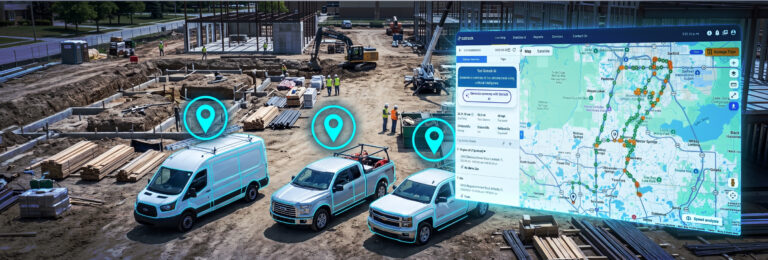
This is where fleet technology and AI-powered systems become critical.
The biggest financial drains are invisible:
Without real-time data, there is no real control.
Modern fleet management solutions allow you to:
- Measure vehicle-level productivity
- Reduce hidden operational costs
But there’s something even more important.
Technology Without Financial Direction Doesn’t Build Wealth
Technology generates data.
Financial discipline turns data into decisions.
Installing a system doesn’t fully transform a business. Transformation happens when you:
- Separate personal and business finances
Wealth isn’t built on revenue.
It’s built on control.
The Cost You’re Not Seeing (But Already Paying For)
That’s what a client in Florida with four active units told us. He wasn’t losing sales, in fact, he was growing so fast that he had to turn work away.
The problem wasn’t demand. It was the margin slipping away every single day.
Every minute stuck in traffic was money leaving his account, because he pays from the moment the driver gets in the truck.
That changed when he started measuring real data: time, routes, and hourly costs.
He stopped operating on intuition.
And that’s when he realized something critical: billing more doesn’t mean earning more. If you’re not measuring this today, you’re probably already paying for it.
The Final Question
If your business depends on vehicles, field equipment, and high variable costs, your financial stability depends on two things:
1. Financial clarity
2. Real-time operational visibility
Without both, growth can quickly turn into constant pressure.